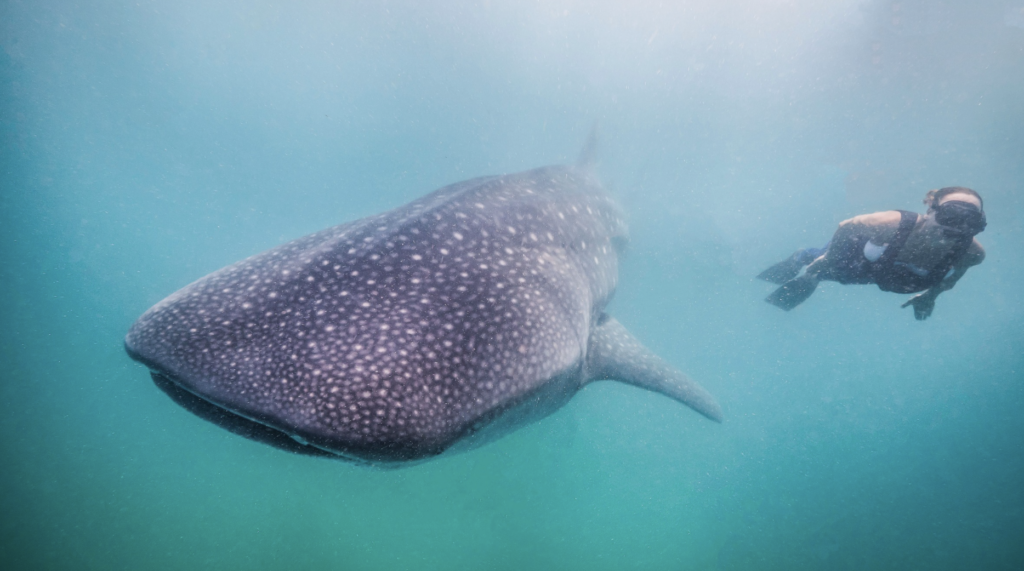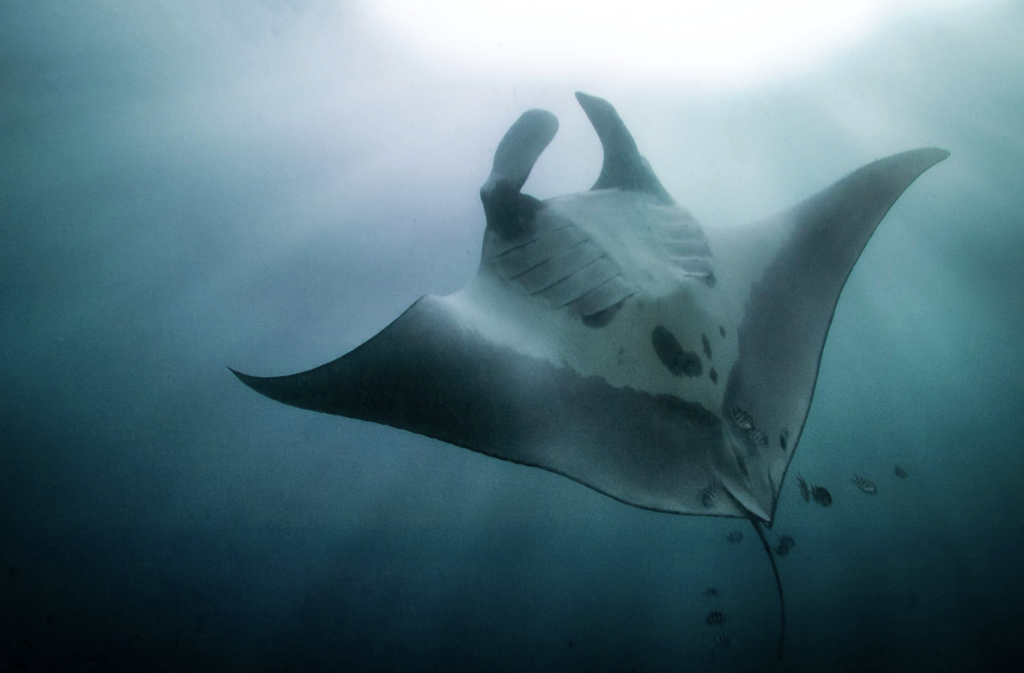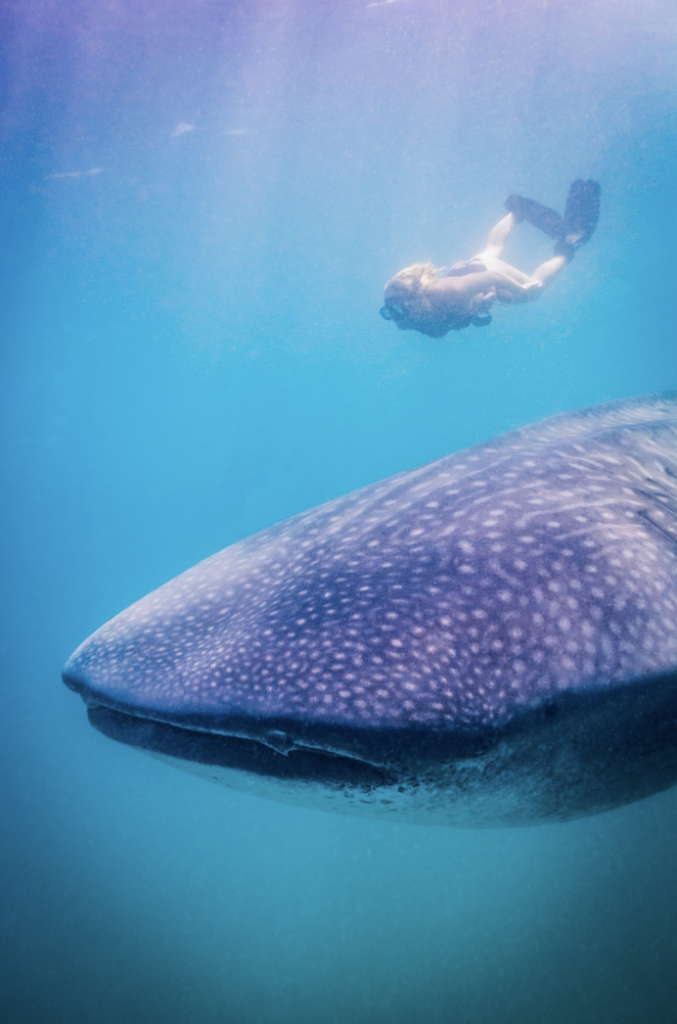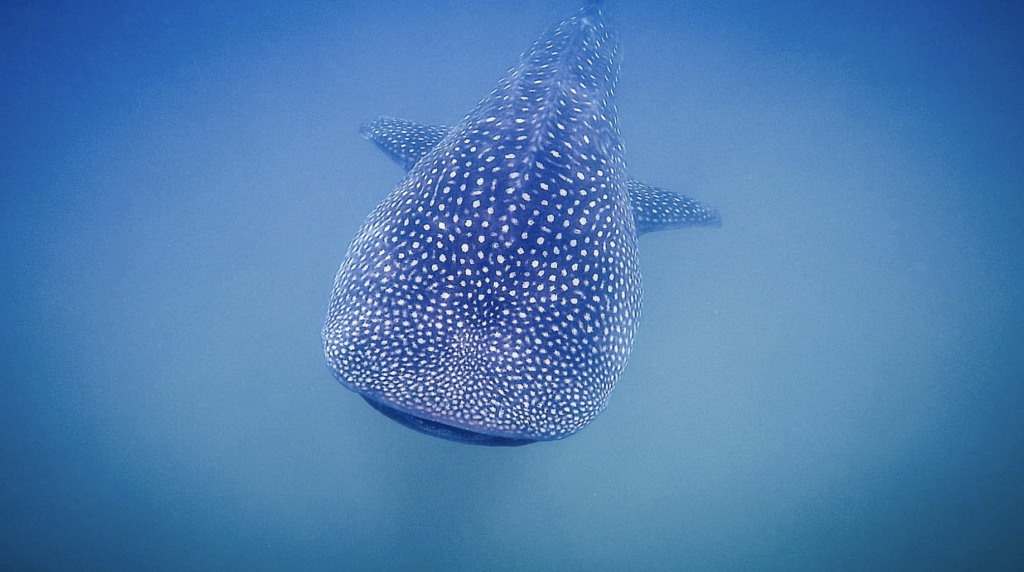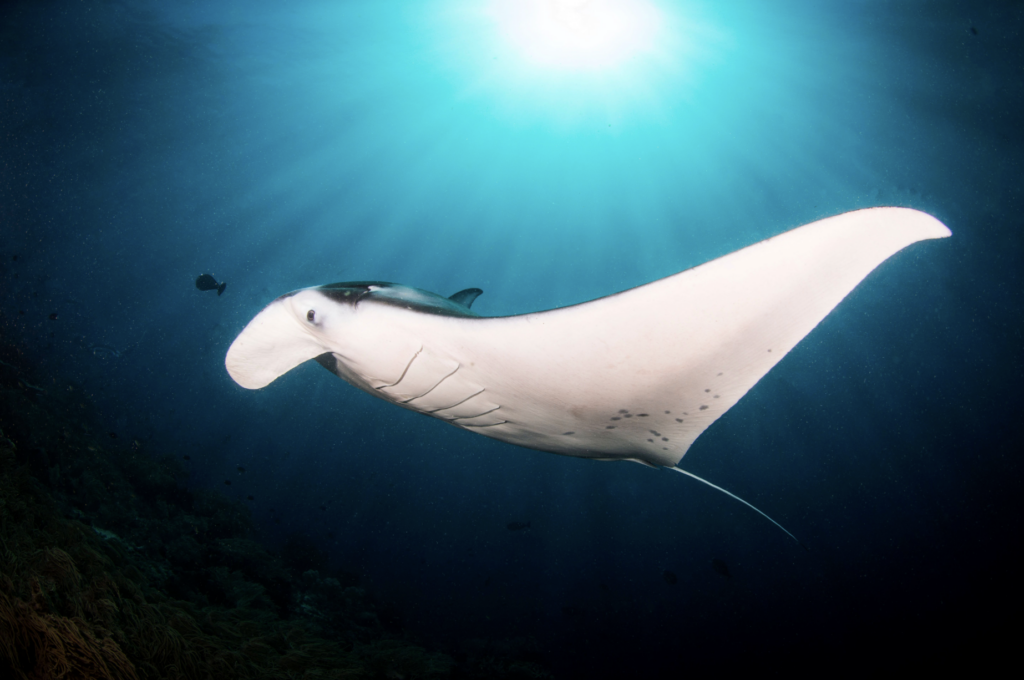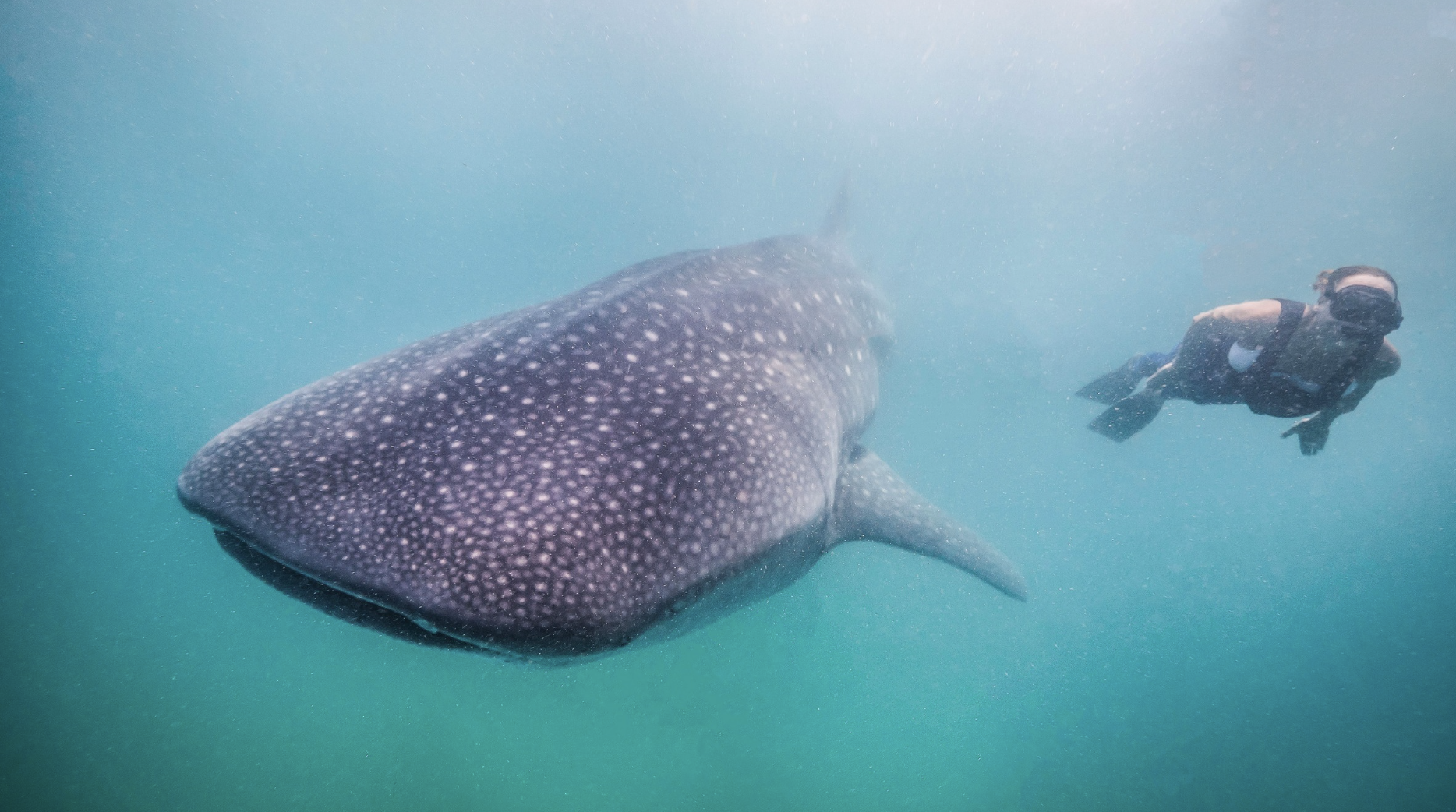
The Inhambane Province has historically been a hotspot for whale shark and manta ray activity, and one of the few places in the world where sightings of these animals are year-round, with both species of manta ray co-existing in our area. Jangamo is an IUCN Important Shark and Ray Area, but in recent years there has been a huge decline in manta ray sightings. We document whale shark and manta ray sightings and collect ID photos to estimate population size, study habitat use and regional migrations. The sightings and ID photos are reported to citizen science databases ensuring international collaboration between research organisations in other megafauna hotspots around the world.
Why is this research important?
As with humpback whales, whale sharks and manta rays are flagship marine species and the protection of them can benefit many other species that inhabit the same waters. Proving high sighting numbers can support sustainable ecotourism as an alternative livelihood for local communities.