

Every number on this page is real work done by our team. Here’s where ten years of Love The Oceans has moved the needle.
5,000+
Children taught to swim since 2016
1,500+
Children reached through school programmes
30%
Ocean literacy knowledge improvement in our community projects
1,000+
Coral colonies tagged and monitored
2,000kg+
ocean trash removed
25,000+
Fish recorded in fisheries catches
2,500+
Sea turtle hatchlings protected
3,000+
Hours spent underwater conducting research

Empowering Communities
Conservation starts with people.
Our community-led projects are designed to build skills, confidence, and long-term opportunity, ensuring coastal communities are empowered to protect the marine ecosystems they depend on. By combining education, access, and locally driven solutions, we support lasting social and environmental change across Jangamo Bay.
The point is simple: a healthy ocean means healthy humans.
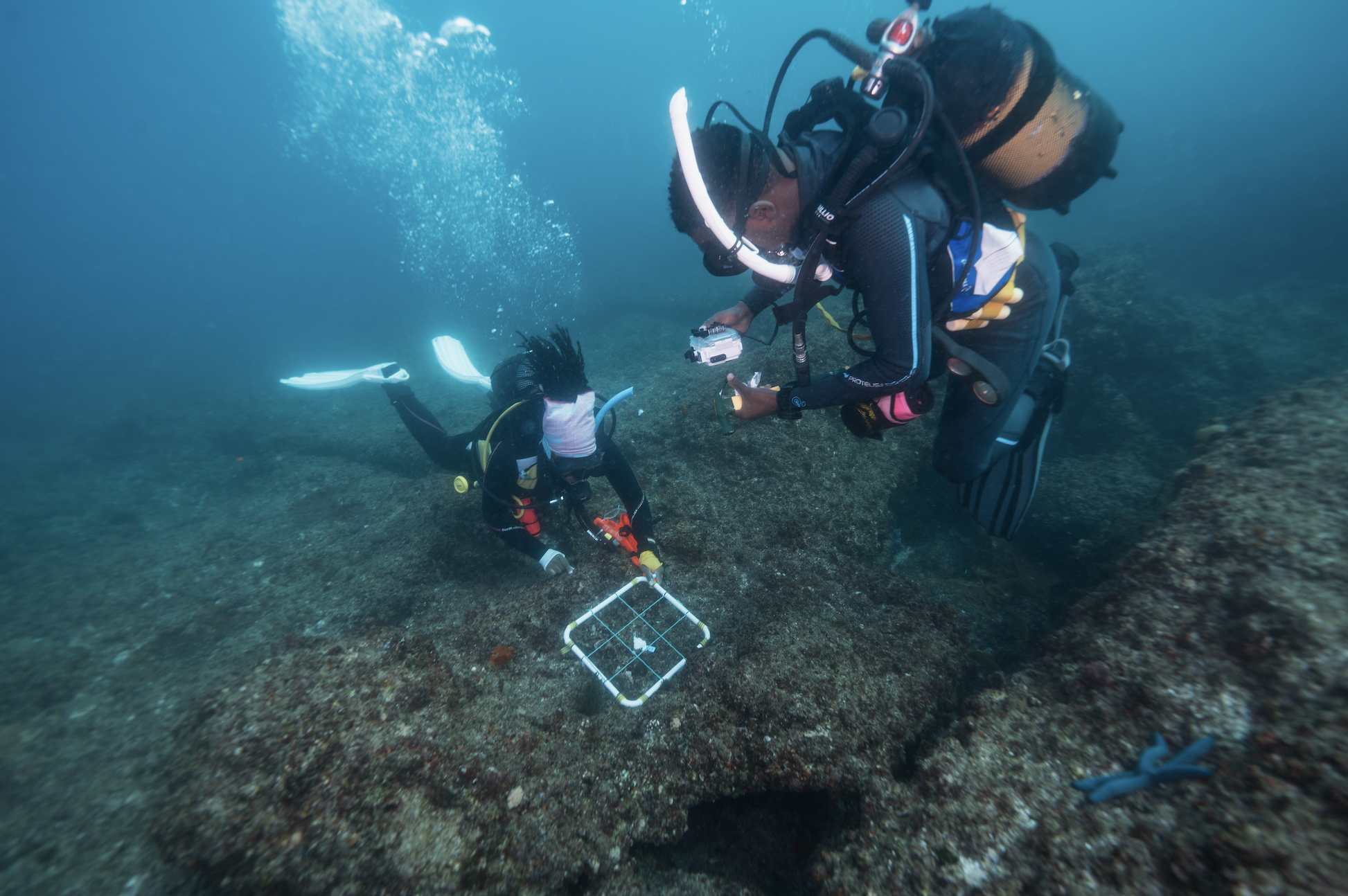
Research with meaning
A decade of data on a fragile, understudied ecosystem.
We collect our data to inform policy change, and community decision-making processes. We don’t just collect data for curiosity, we collect data in order to best inform conservation action and make sure the right, most effective conservation decisions are made.
Algae cover on our reefs has doubled since 2018. Fish biomass is alarmingly low. We’ve catalogued sixteen coral diseases present in our area alone. The ocean is facing unprecedented threats. And the time is now to tackle them.

Local Impact
Global Recognition
Love The Oceans has continued to gain national and international attention, reflecting growing recognition of our community-led, science-driven conservation work.
From speaking at the United Nations Oceans Conference and climate COPs, to podcasts, magazine articles and multiple awards, this visibility has helped amplify community voices, reach new audiences and strengthen the profile of grassroots conservation globally. Love The Oceans continues to show that locally-led solutions can drive meaningful change far beyond our coastline.
OVER A DECADE IN A SNAPSHOT
How we got here.
-
2013
The shark killing.
Francesca Trotman witnesses shark killing on a beach in Mozambique and decides to she wants to understand more about this ecological threat.
-
2014
LTO is founded.
Francesca returns to Mozambique to complete her Master’s research on the shark fishing, and later that year, Founds Love The Oceans to tackle unsustainable exploitation of the ocean.
-
2015
First expeditions launched, and two school partnerships established
Ocean-literacy lessons start in two local primary schools, the first classroom improvements are completed and the first expeditions are launched.
-
2016
Swimming lessons, coral reef surveying and ocean trash data collection begins.
We start teaching local children to swim – inclusive community ocean governance and monitoring of a marine area cannot happen if the community cannot access it safely. We also launch coral reef survey monitoring using line transects and begin logging ocean trash data during beach cleans and dives.
-
2017
Humpback whale research begins.
Alongside our fisheries and coral reef research, we launch our megafauna research collecting IDs of whale sharks, mantas and humpback whales, and start visual and bioacoustic studies on our humpback whales.
-
2018
First Mozambican swim instructor and Ocean Conservation Champion program launch
We qualify the first Mozambican in the district as a swim teacher and we launch the Ocean Conservation Champion program- an internship for local kids.
-
2019
First documentary released
Our first documentary is released featuring Pascoal, our Community Outreach Manager and his journey with the ocean and conserving it.
-
2020
Ocean Conservation Champions qualify as scuba divers
Two of our Ocean Conservation Champions qualify with their PADI Open Water and graduate the program, becoming Love The Oceans full time staff.
-
2021
Jangamo Bay becomes a Mission Blue Hope Spot.
Global recognition; first major step toward a full Marine Protected Area.
-
2022
Hard coral project and Ocean School launched
We partnered with Leeds University to launch a hard coral tagging study to monitor over 1000 hard coral’s survival across our area. We launched Ocean School, a 6 month Ocean Literacy program for adults.
-
2023
Sea Her project and apex predator research launch
We launch our Sea Her project, qualifying the first Mozambican women from our district as swim teachers, life guards and scuba divers, and completing over 200 surveys with local women to understand how women’s health is intertwined with ocean health. We start our Baited Remote Underwater Video studies to begin monitoring apex and meso predator populations.
-
2024
The first Mozambican dive professional, and COP recognition
We qualify the first Mozambican – one of our Ocean Conservation Champion graduates – from our district as a PADI Divemaster, a huge moment in our capacity strengthening work. We win the Gender Just Climate Solutions Award and are invited to COP29 to receive the award, where we facilitate sessions on gender equity and ocean conservation.
-
2025
Peixinho documentary released, Ripple Network launches, The Inhambane Seascape Alliance joined, further awards won
A documentary is released on Bento, one of our Ocean Conservation Champion graduates and his work with us, winning over 25 awards around the world. We launch The Ripple Network, a global network of grassroots organisations built to facilitate collaboration and knowledge sharing, and we join the Inhambane Seascape Alliance, an alliance of grassroots, community-led NGOs across the Inhambane Province working to ensure community voices are heard in decision-making spaces. We win the University of Southampton’s Rising Star Award in recognition of our work.
-
Next
Improve marine policy
We’re working to revitalise our Community Fisheries Council, responsible for implementing and enforcing fisheries bylaws, whilst working with government on provincial and national levels to positively influence conservation policy.
Keep it going
We still need your help!
We use expeditions to fund our work and share our passion. Donations cover everything else – our supporters mean the world to us..