Biodiversity Surveys
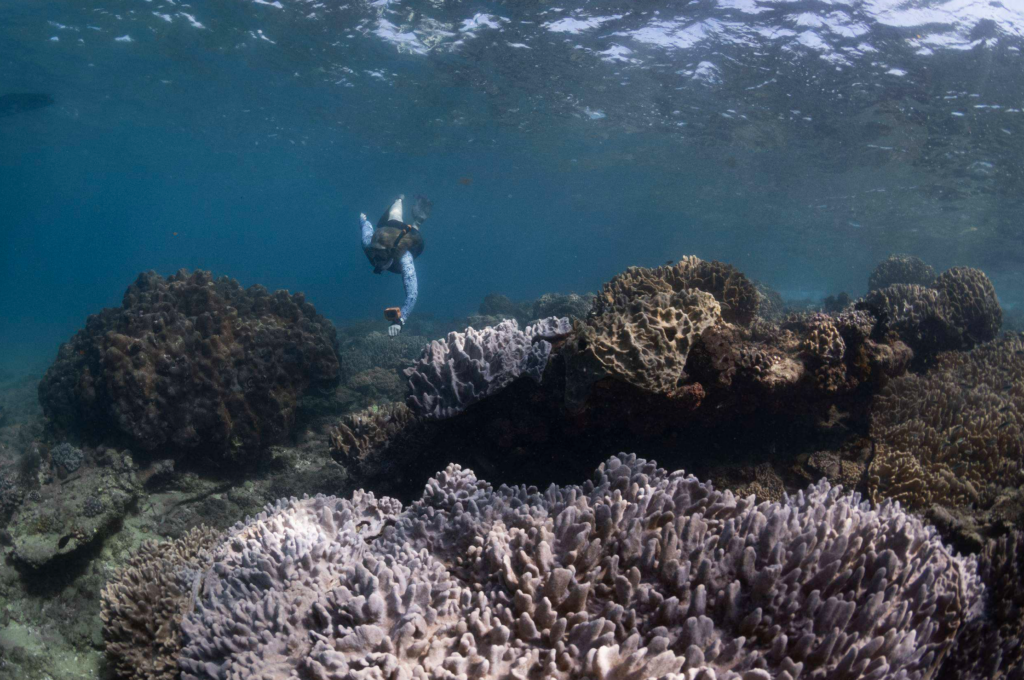
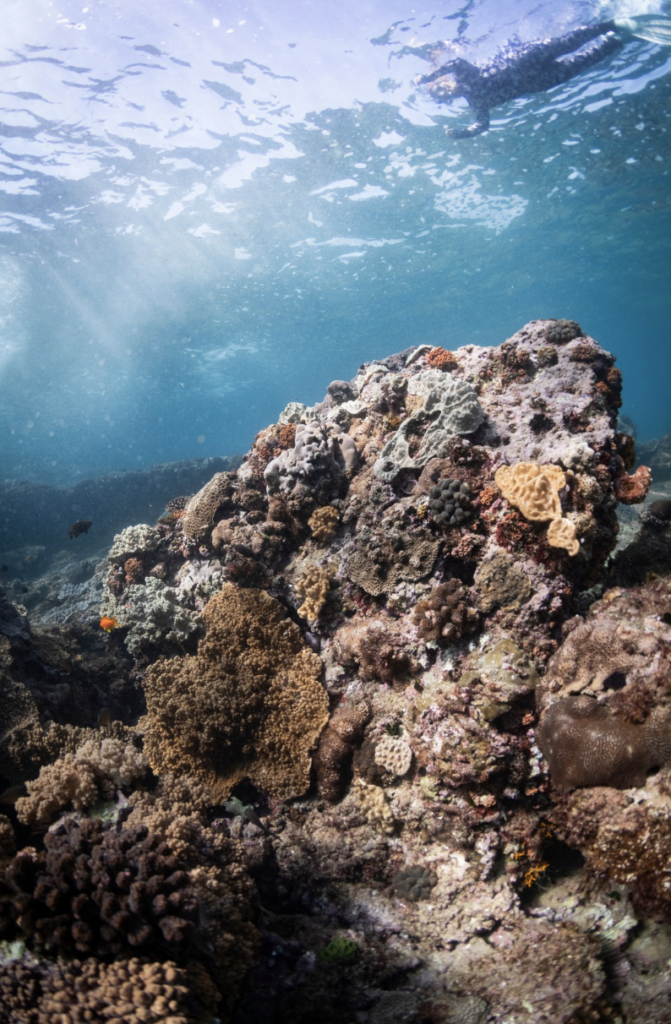
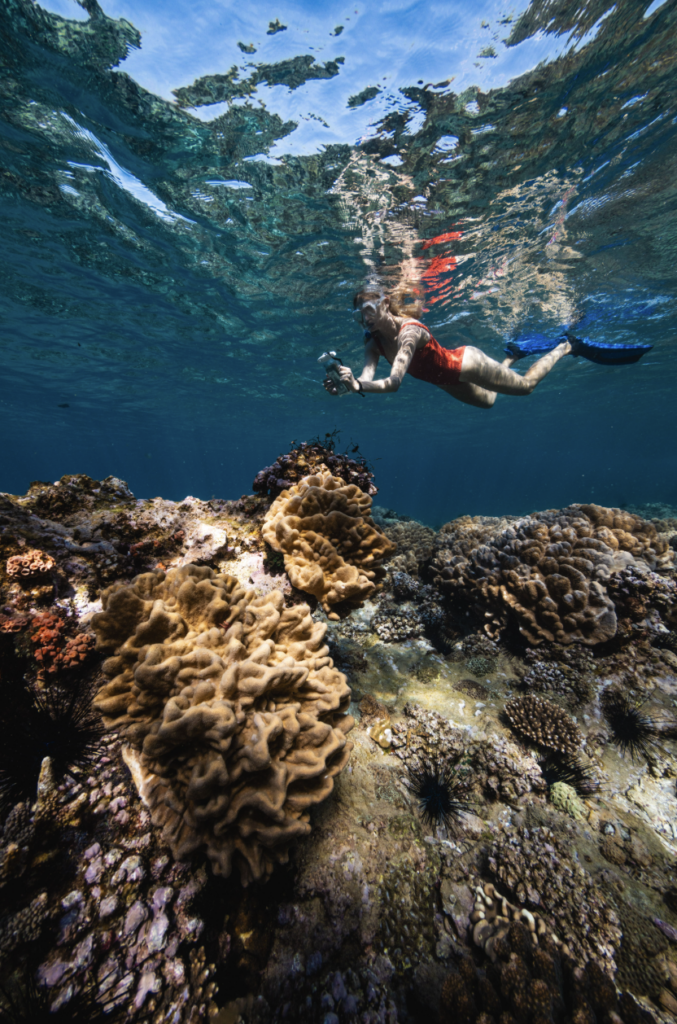
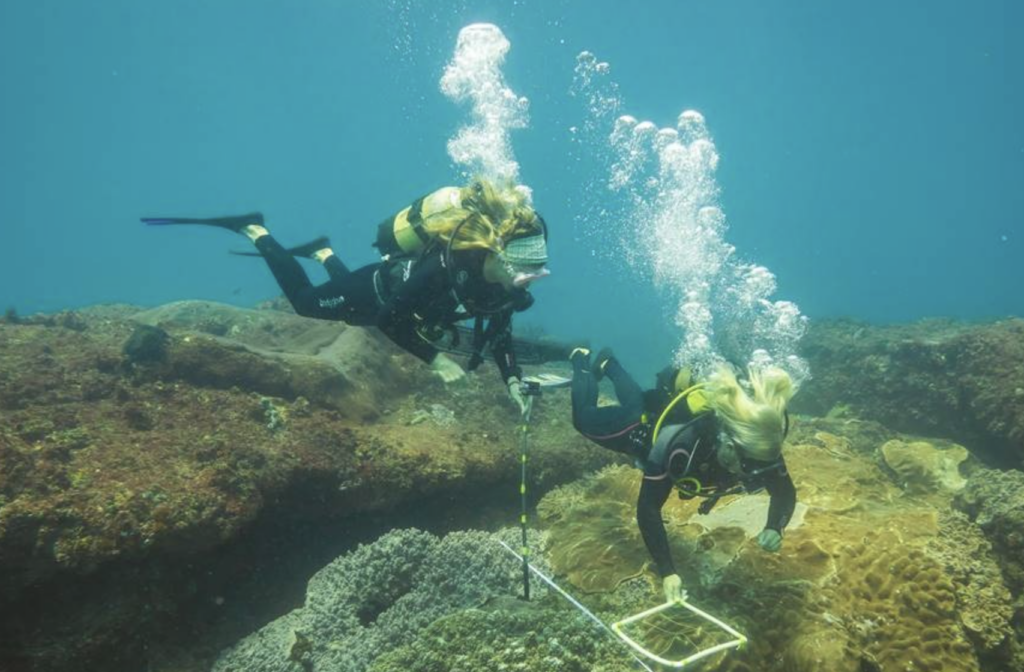
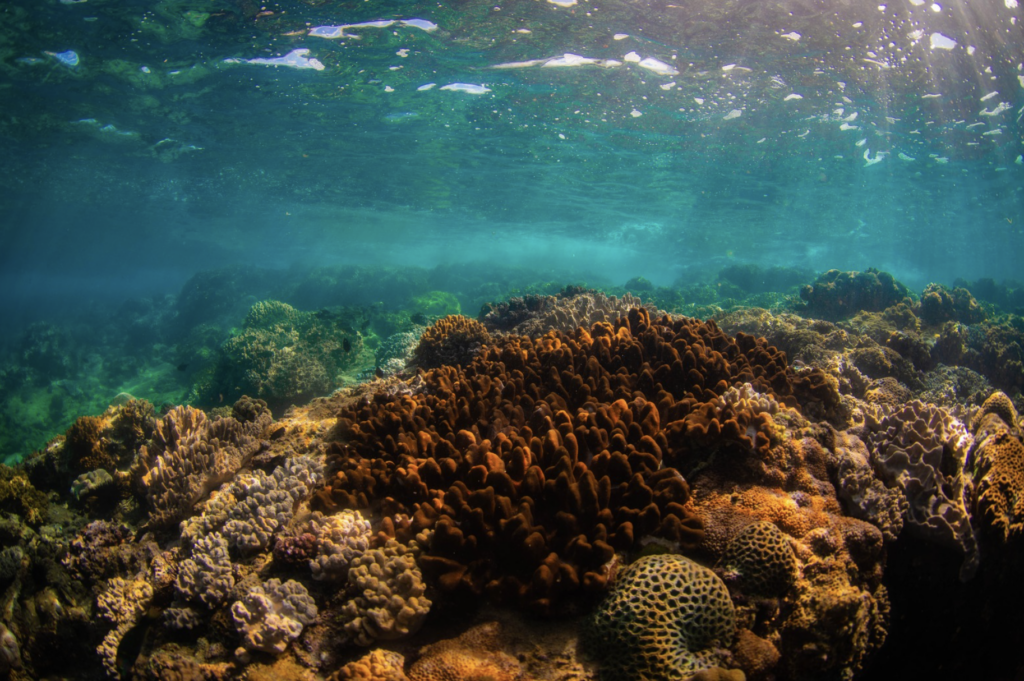
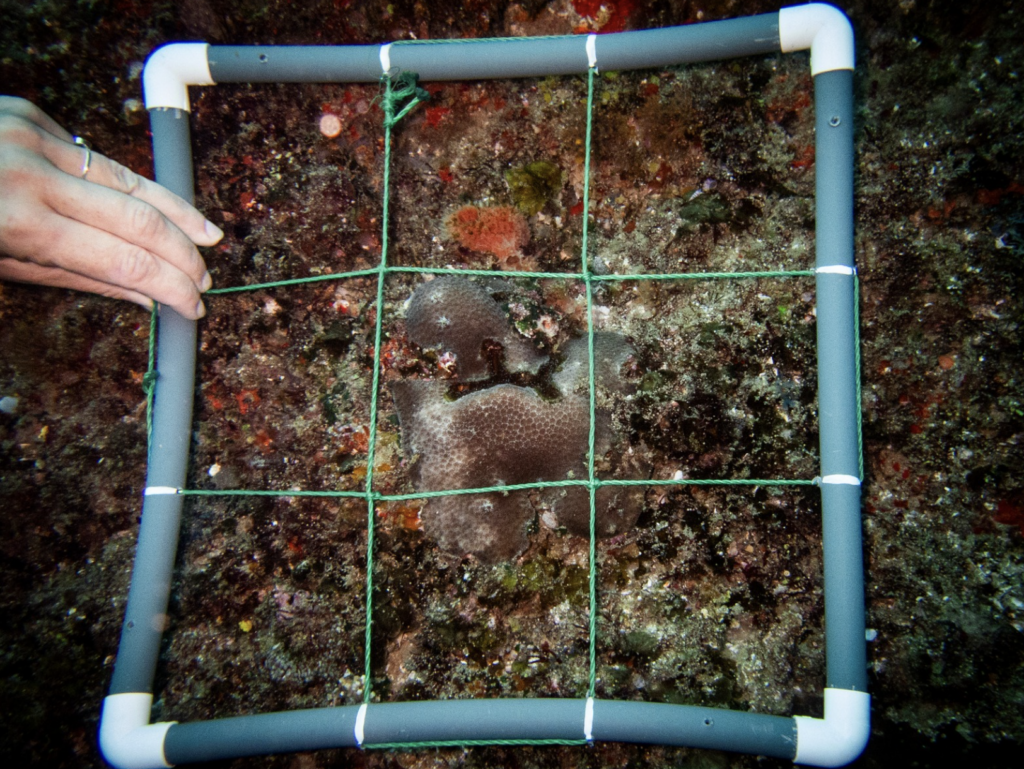
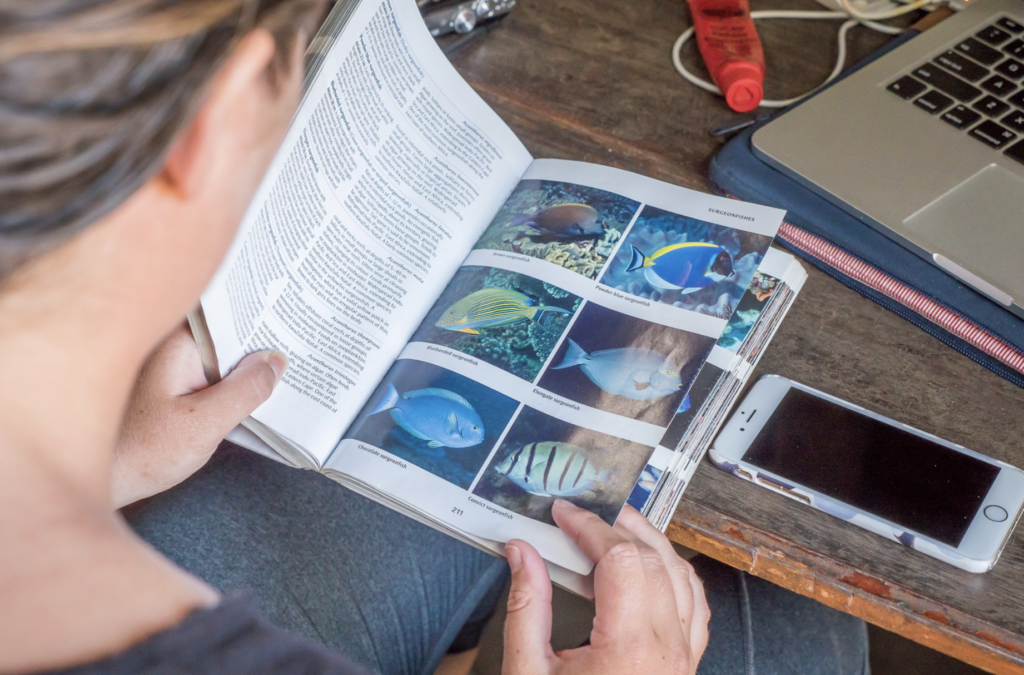
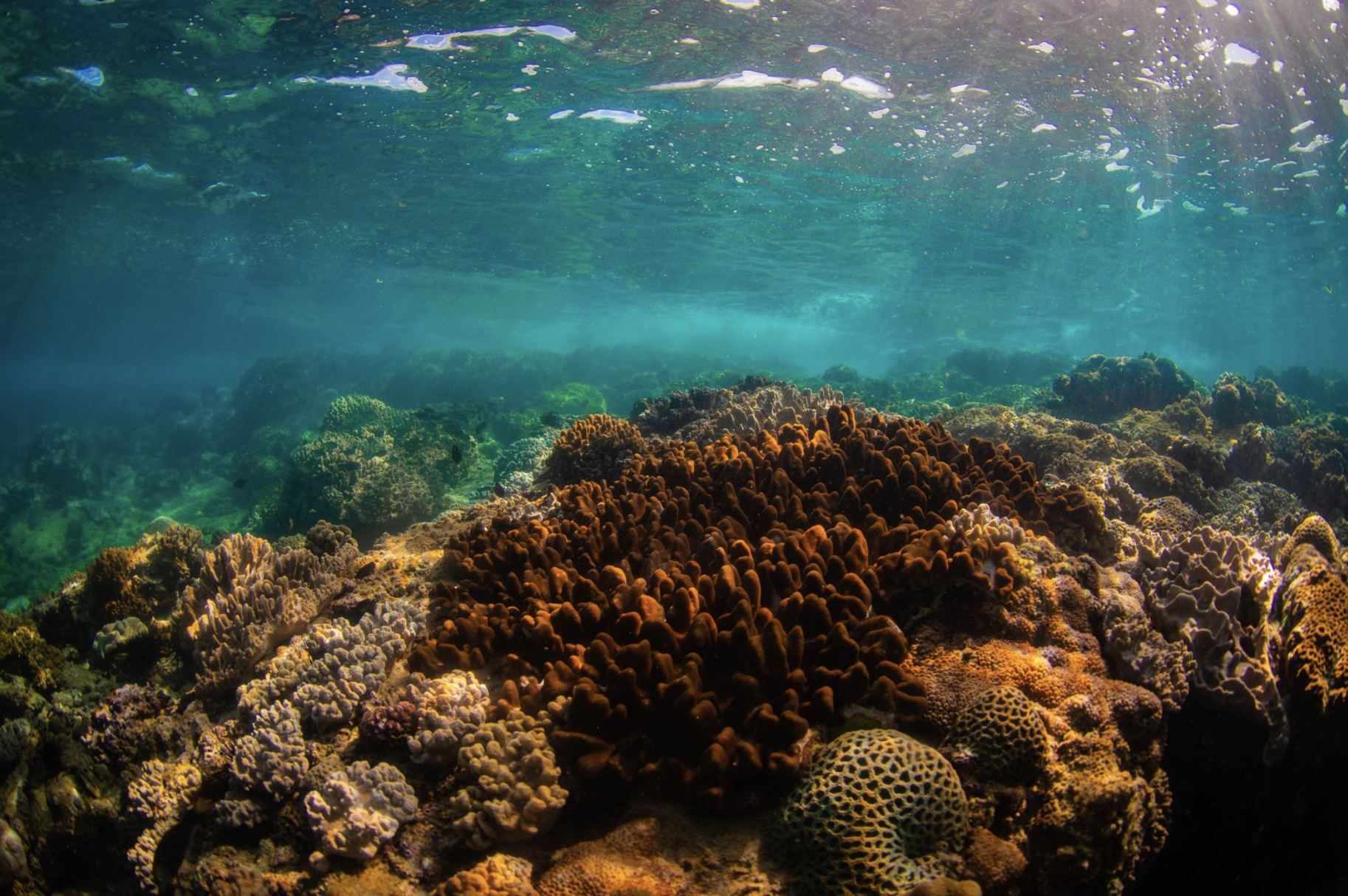
Love The Oceans conducts biodiversity and coral reef assessments on the coral reefs in Jangamo. We conduct regular line transect surveys to study reef-associated cryptic and non-cryptic species, and photo-quadrants to look at benthic composition. This gives us a good picture of overall ecosystem health.
Whilst many would expect Jangamo to host healthy coral reefs with a high biodiversity and biomass this is unfortunately not the case. Our initial research shows an alarming low biomass of reef fish, verging on ecosystem collapse, which when coupled with our fisheries research shines a light on unsustainable ecosystem exploitation. The benthic data from these same surveys show algae cover has doubled between 2018 and 2024. These ecosystem shifts are worrying and emphasise the urgency of Love The Oceans’ work.
Hard Coral Tag Project
Love The Oceans is pioneering the first long-term coral demographics study in Jangamo Bay, establishing permanent monitoring plots to track the growth, survival, and mortality of hard corals over time. Despite Jangamo’s reputation as a biodiversity hotspot, our early findings suggest historic stress events have reshaped the reef, with more tolerant genera now dominating large areas. By tagging and photographing over 1,000 individual coral colonies over the last 4 years, our team is building a significant dataset to understand how climate change, bleaching, storms and local pressures affect coral population dynamics.
This project forms part of a global coral demographics research programme led by the University of Leeds, comparing how demographic rates differ across tropical and subtropical reefs worldwide. The data underpin evidence-based reef management by identifying which species are most resilient, which are most vulnerable, and whether local recruitment is strong enough to support natural recovery. These insights guide future interventions like our project BEAM and help determine future mitigation strategies. This work provides essential baseline information to understand reef health trajectories and what can be done to protect them.
Coral Disease
Love The Oceans is conducting the first-ever coral disease assessments in Jangamo Bay, establishing a critical baseline for understanding reef health in this understudied region. Our initial surveys documented 16 coral diseases across 14 coral families, revealing widespread infections affecting both hard and soft corals. White syndromes, particularly white pox, dominated disease patterns, and biotic stressors such as boreholes, burrows and predation scars showed strong associations with disease occurrence.
These findings highlight that disease is an emerging and urgent threat to Jangamo’s reefs, compounding existing stress from warming seas and ecosystem imbalance. Establishing this baseline allows Love The Oceans to integrate disease monitoring into long-term conservation strategy, inform future management actions, and ensure our protection measures remain resilient in the face of rapidly changing ocean conditions. Due to lack of funding, this project is currently paused.
Project BEAM
Project BEAM (Biodiversity Enhancement and Algae Management) is Love The Oceans’ pilot ecosystem intervention initiative to restore reef health by tackling one of Jangamo’s most pressing ecological threats according to our research: overgrown macroalgae. Years of ecosystem imbalance and declining herbivore fish populations have allowed algae to smother corals, reducing coral cover and limiting new coral recruitment. Healthy coral reefs underpin biodiversity, fisheries, and local livelihoods, making intervention essential.
Through Project BEAM, our team clears macroalgae from designated reef plots, creating open substrate where corals can settle and grow. Each plot is maintained and monitored over time, tracking coral recruitment, growth, and changes in reef biodiversity. By combining hands-on restoration with rigorous scientific monitoring, this project provides the first evidence base for macroalgae management in Jangamo and evaluates whether targeted algae removal can accelerate reef recovery. As results emerge, this pilot will form a scalable framework for algae management in other degraded reefs across Mozambique and beyond, offering practical solutions that unite science, community engagement, and long-term ecosystem resilience.
Why is the data important?
This data, combined with the fisheries data has informed our Sustainable Fishing Project, working to shift fishermen away from unsustainable fishing practises like monofilament netting, to more sustainable practises like rod and line by kayak. This reef research is the first conducted in the area, and this information is critical to understanding what is happening in the living ecosystem and informing protection policy and our conservation intervention measures.