Words by Renata
My first week in Jangamo Bay — the result of many months of effort and the first time I have ever been this far from home.
The entire journey from Mexico to Mozambique went better than I expected. Despite the time difference and the language barrier, I have managed to communicate and survive the jet lag in my own way — going to bed early and waking up countless times throughout the night.
Unfortunately, a cold front came in along the Inhambane coast right as we arrived, so the weather has been a challenge: lots of wind and cold — the kind of climate I am not used to and was not quite prepared for. However, this did not phase us, as the first week of the programme consist of introductory lectures, methodology run throughs and practicals. This includes from how to collect data on the local fishermen’s catches, to the sheer number of whales we spotted in a single morning, to the impact the organisation has had on the community, the schools, and the swimming lessons.
Monday was a calm and sunny day. We woke up early, had a snack, and took advantage of the good weather to spend the morning on the beach, watching the waves — something beautiful and truly majestic. After that, we had our introduction to the local fisheries, our role as research assistants within the Love the Oceans team, and what we would be doing over the next four weeks.
On Tuesday, just like the fishermen, we woke up early to get to the beach on time, wait for them to come back from the water, and collect data on what they had caught that morning — including reef fish, sharks and rays. After that, we went back to the base to enter all that information and consolidate it in Excel.
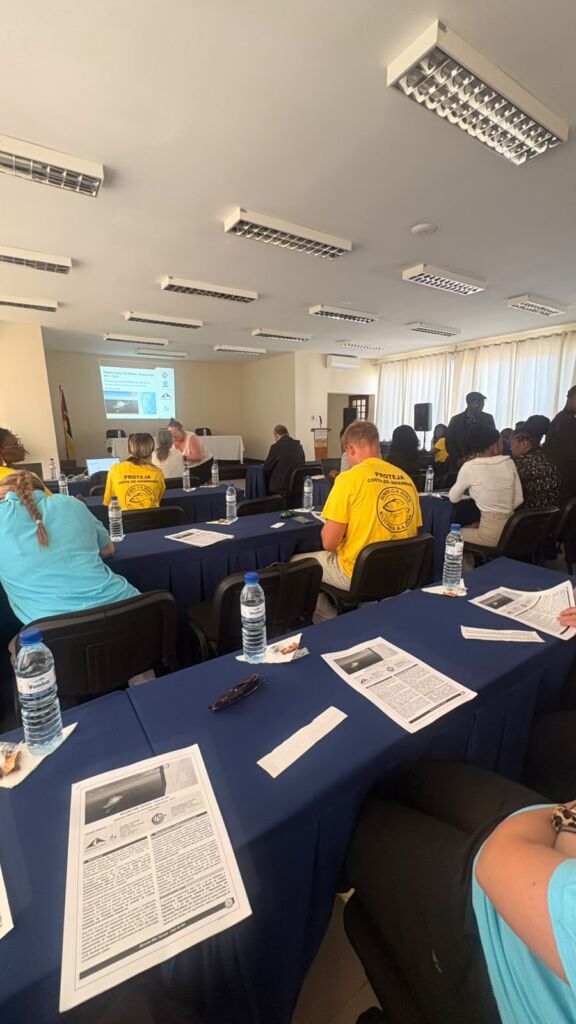
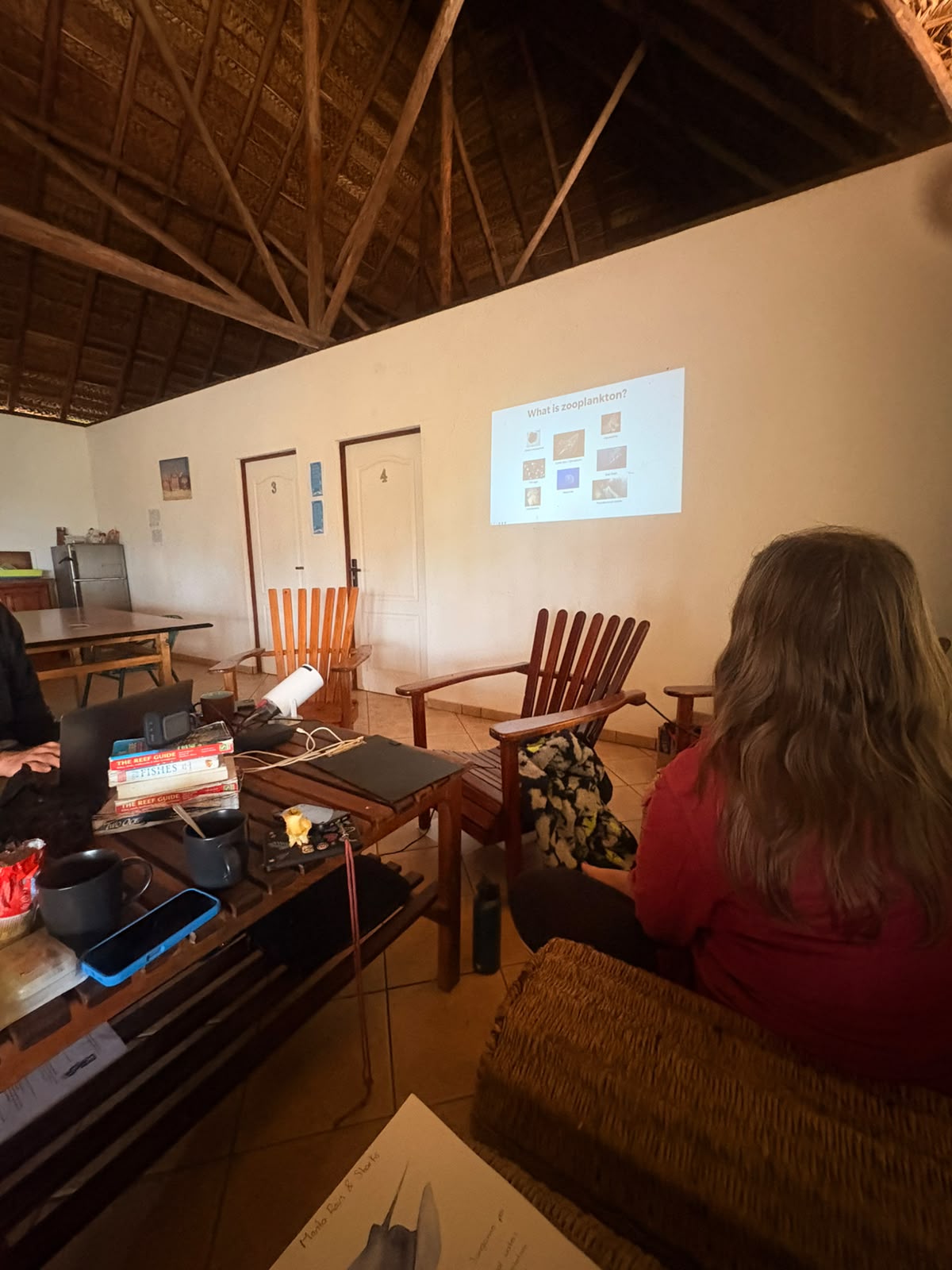
On Wednesday the wind picked up so we sheltered and did a full day of lectures: local megafauna, the data collection methods used by Love the Oceans, and how we would be carrying out the surveys — which cover not only whale behaviour but also the fisheries data, tracking what ends up in the fishermen’s nets and what that means for the health of the ocean and the local community — as well as the coral reef methodology.
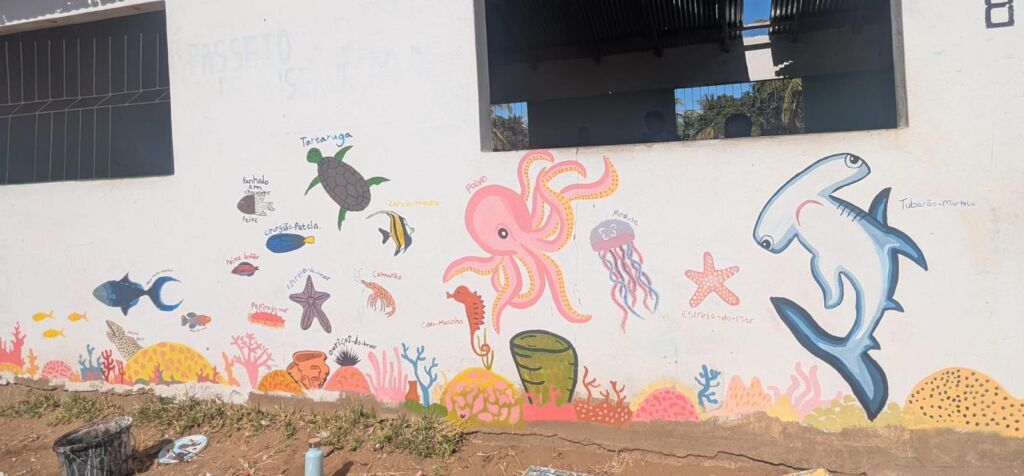
On Thursday we headed out early to observe whale behaviour. We also did a beach clean, logging the trash we found. Later in the day we entered and consolidated the whale data in Excel, and then had a cultural tour of the area with Pascoal, the community officer. We visited the schools where we will be helping out, and Pascoal welcomed us into his home with his family — he cut open coconuts for us, we made Fissos, we carried buckets of water on our heads the way the community do every day, and thanks to a clear sky that evening we listened to music under the stars (the sky here is absolutely stunning). We made it back in time for dinner and got some well-deserved rest.
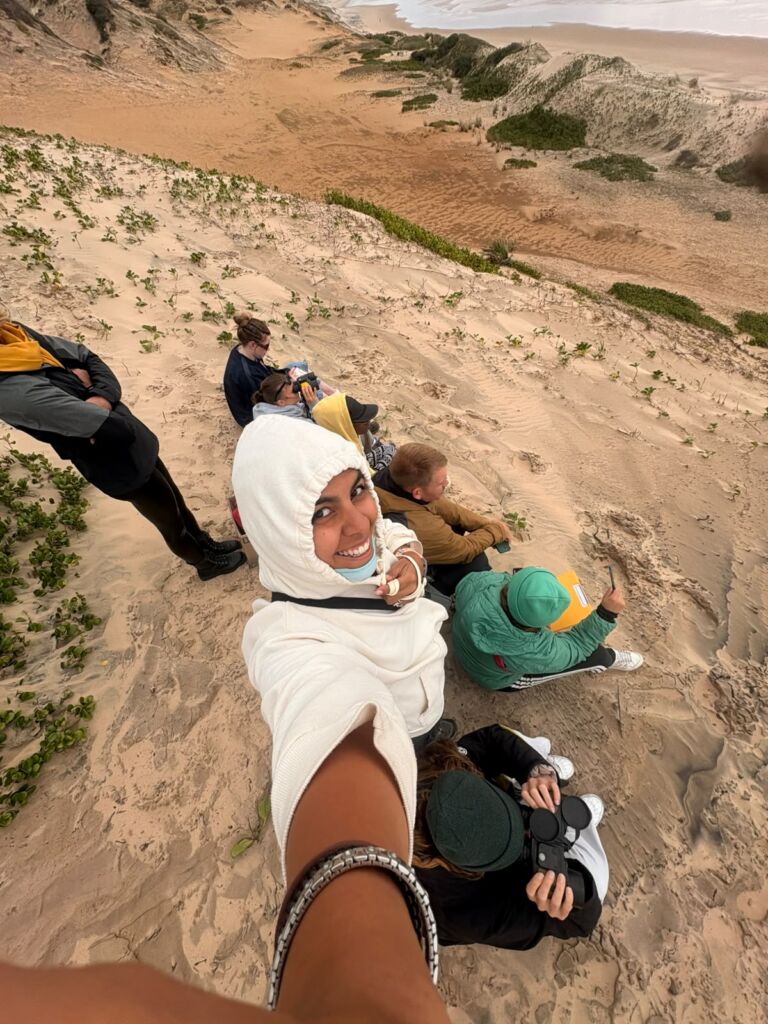
On Friday we had our day off. Since the weather was too rough to dive, we had a slow morning — we walked along the beach and the dunes, I meditated for a while by the pool, and in the afternoon, we headed to the village to top up our phone data and picked up some mandarins on the way back.
Finally, Saturday morning started a little earlier than usual. We went to the dive centre for our first scuba dive here at Jangamo Bay. Coco, our dive instructor, gave us a briefing to refresh the basics of scuba diving, followed by a quick run-through of the coral reef survey methodology. Getting into the boat was quite an experience — as Coco said, ‘there is no elegant way to get onto the boat,’ and honestly it made me laugh. Afterwards, we helped with the swimming lessons for the children of the village and wrapped up our remaining lectures.
One thing I was not expecting to enjoy as much as I have is the food. The spices, the flavours, the combinations — it has all been a really interesting new experience. I do miss Mexican food, but one thing I was happy to discover is that hot sauce is very much present in this part of the world, and honestly the flavours feel surprisingly familiar.
A very interesting first week at the Love the Oceans — I cannot wait to see what adventures come next!