In week three, both groups started with fisheries and humpback whale research but were then were split between schools and diving toward the latter part of the week. At the start of the week Group 2 (Breach for the Stars) had three fisheries days. On the night prior to the first fisheries day, a large storm had hit and left extremely unfavourable conditions for fishermen to go out the next day. The storm had brought masses of rubbish up from the Indian Ocean garbage patch so we decided to do a beach clean in the morning. Pieces of rubbish to note (plenty of toothbrushes, flip flops and plastic bottle caps).
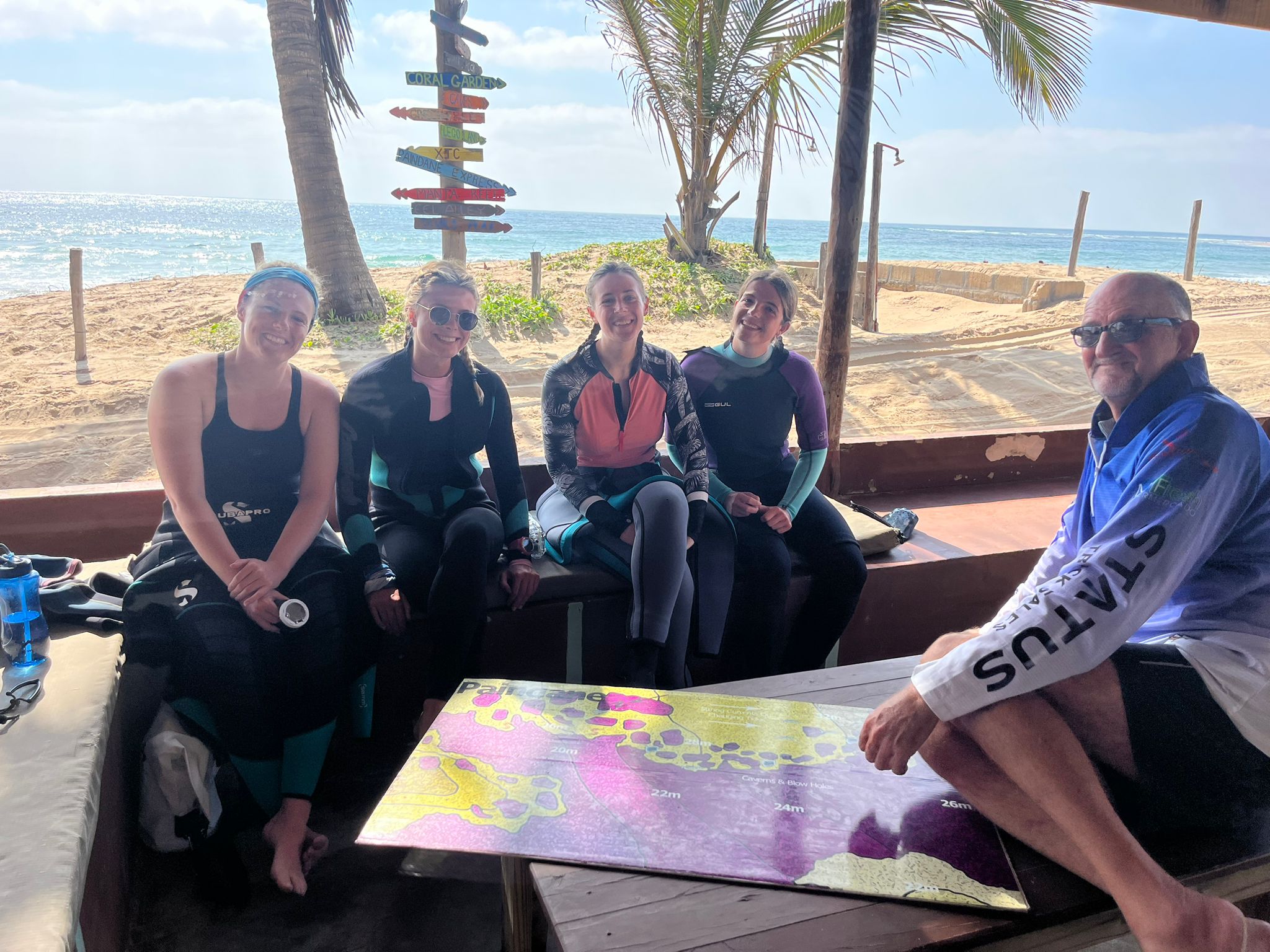
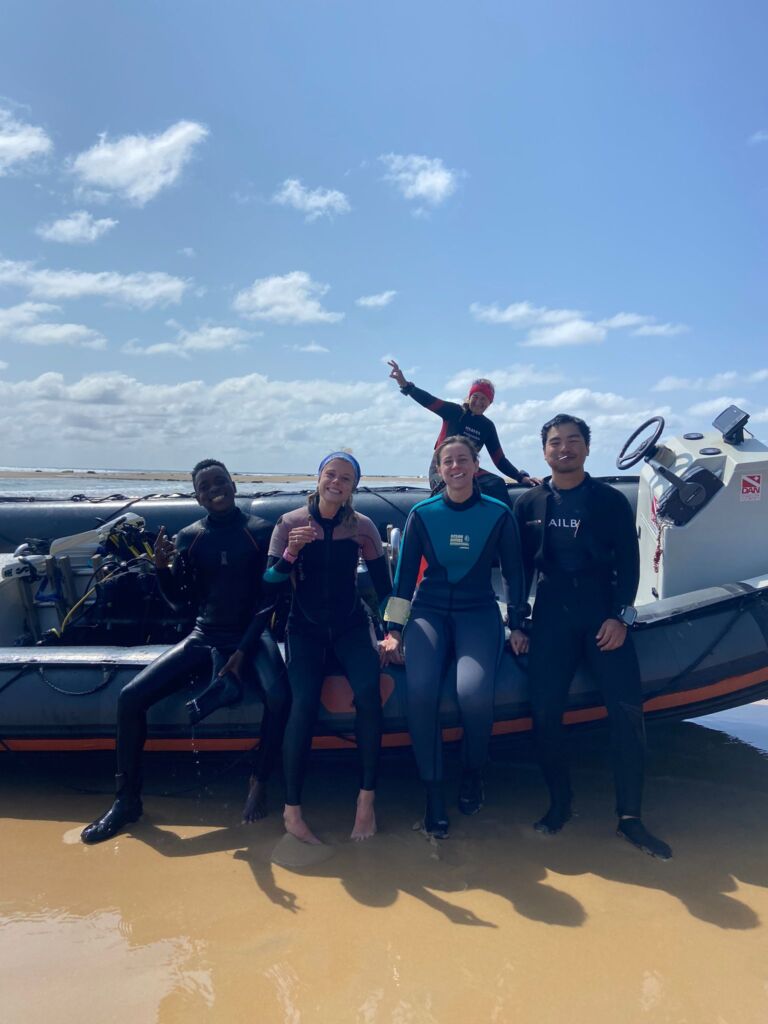
For the transect dive we split our roles accordingly to who was comfortable doing what. Dive number 1 there was a particularly strong current which meant we had to really concentrate on our buoyancy and filming technique. On dive number 2 we came up for our safety stop and had the most insane whale encounter. The visibility was low and hence the whale didn’t see us and we didn’t see her until she was quite literally a metre away to the side. Her pectoral fin was unbelievably close to us. This was, undoubtably, an experience none of us will forget! 🤙🏼🐋. Dives 3 and 4 went as planned with decent conditions and some strong current, and our data logging was quick and efficient (it’s getting much easier now we are familiar with the marine species endemic to the area). Group 2 will move onto schools next week where we will continue with the marine science education work.
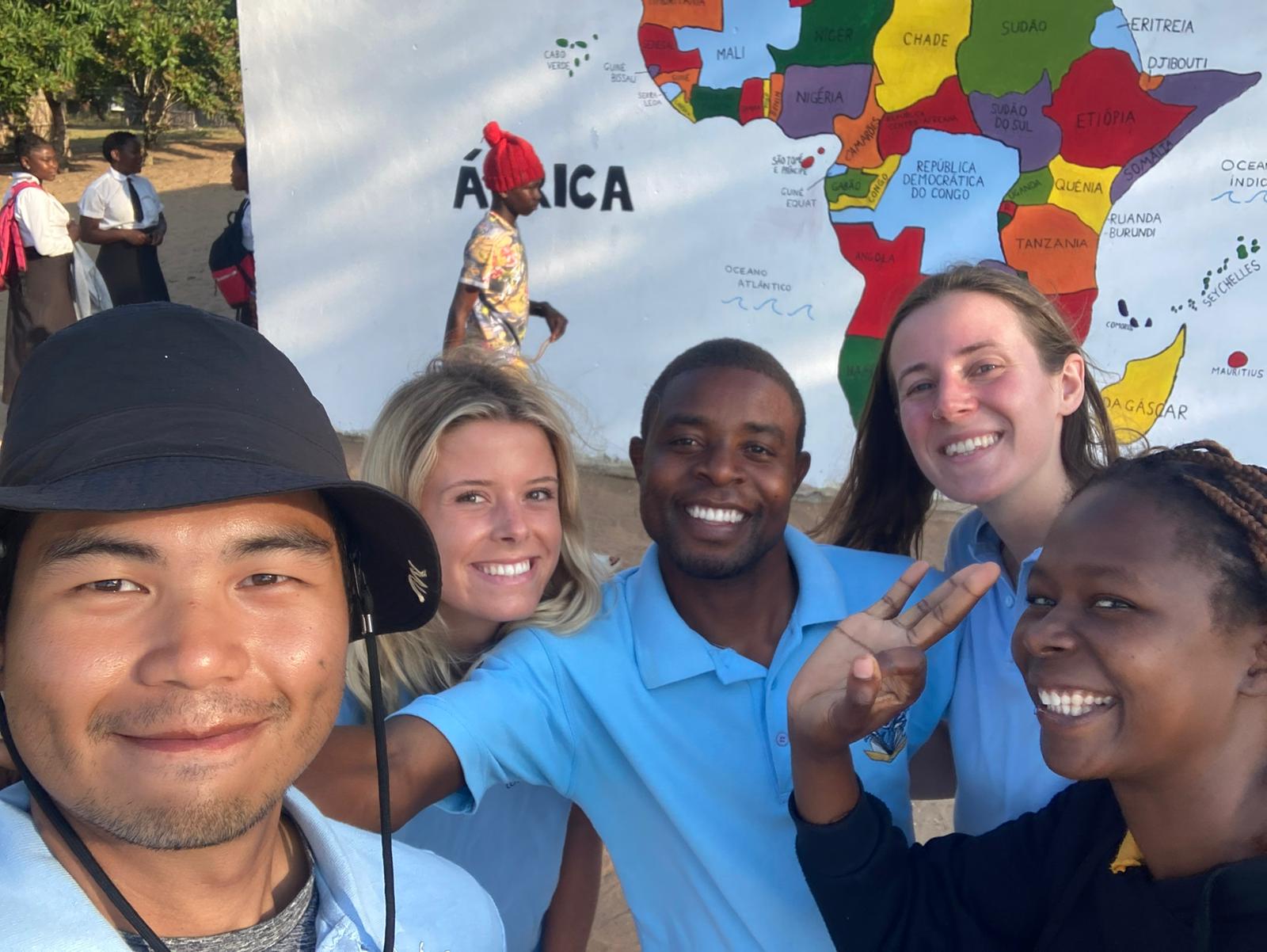
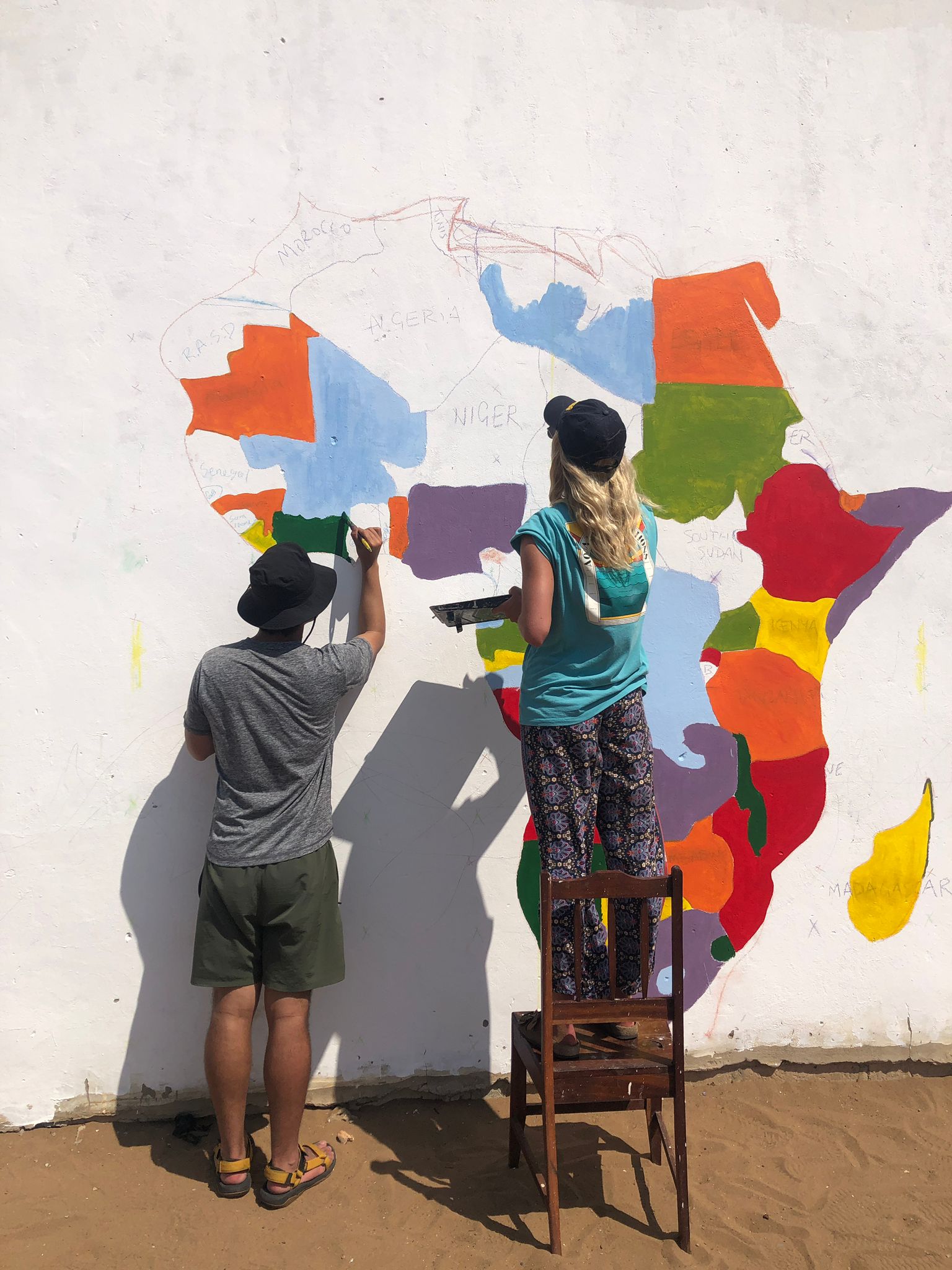
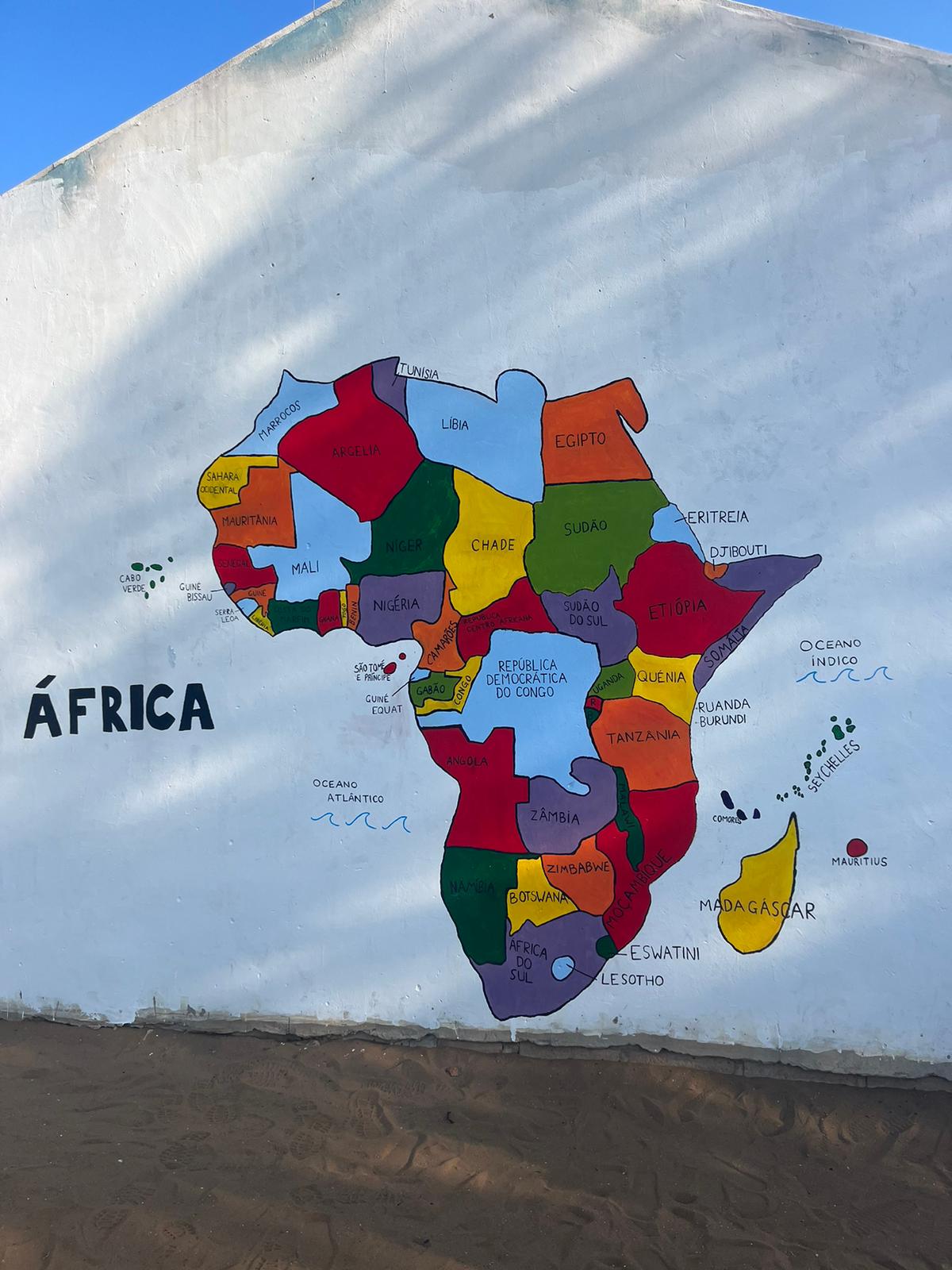
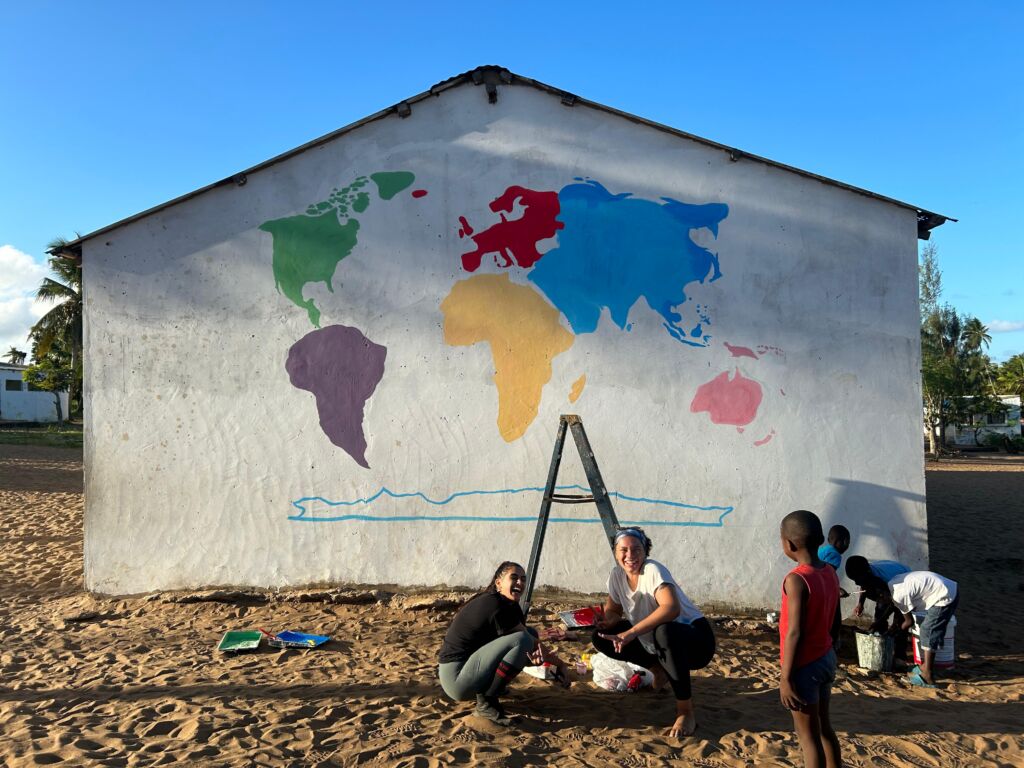
Group one had schools this week and were tasked with painting the continent of Africa on the gable end of one of the classrooms at Paindane – a little daunting but we grabbed paint and rollers from the car and got started! We began by painting the whole wall white and then creating a grid on the wall that matched the lines of latitude and longitude so we could carefully map our map onto the wall in (roughly) the right proportions. By the end of day one we had a white wall with some smudged ‘x’s marking the squares and a rough outline…it wasn’t looking particularly hopeful… But over the next two days we got to work drawing in each country, painting them all and adding the names, oceans and islands and it was a great success! And a real joy to hear the children watching us and spelling out as many countries as they could.
We also worked inside the classroom teaching groups about fisheries, fishing technique and turtles with Pascal as our trusty translator and local marine expert. It was great to get the local kids excited and curious about their local marine life and the impacts that various fishing methods can have on the reef.
Only one week left! Looking forward to what it holds…