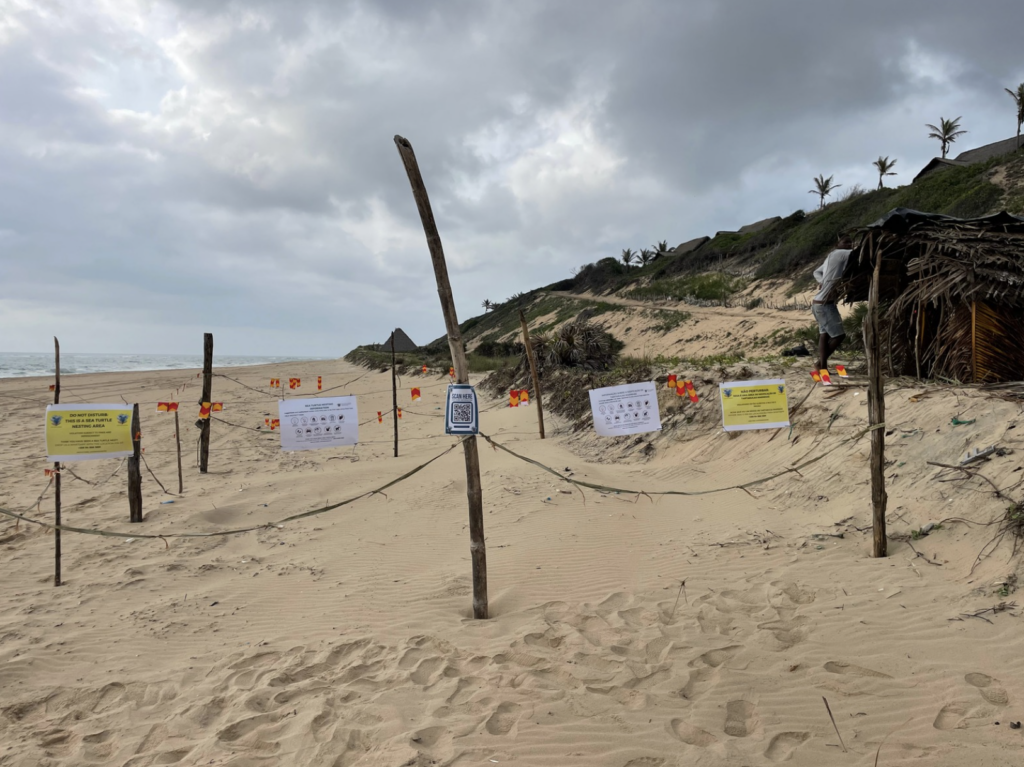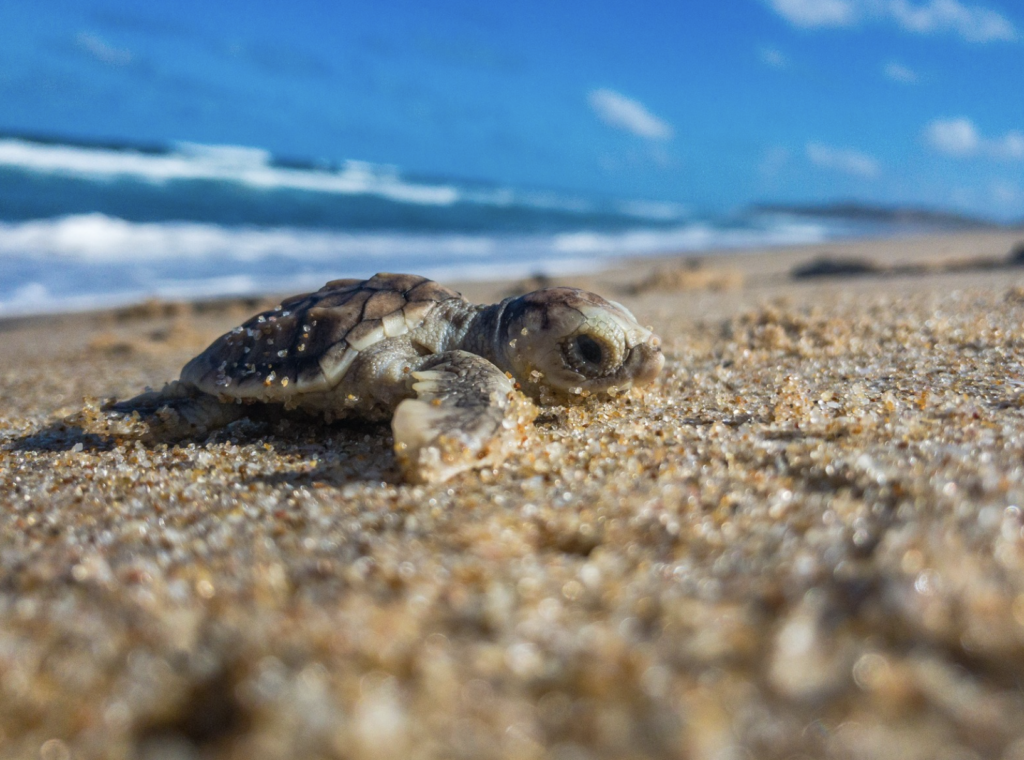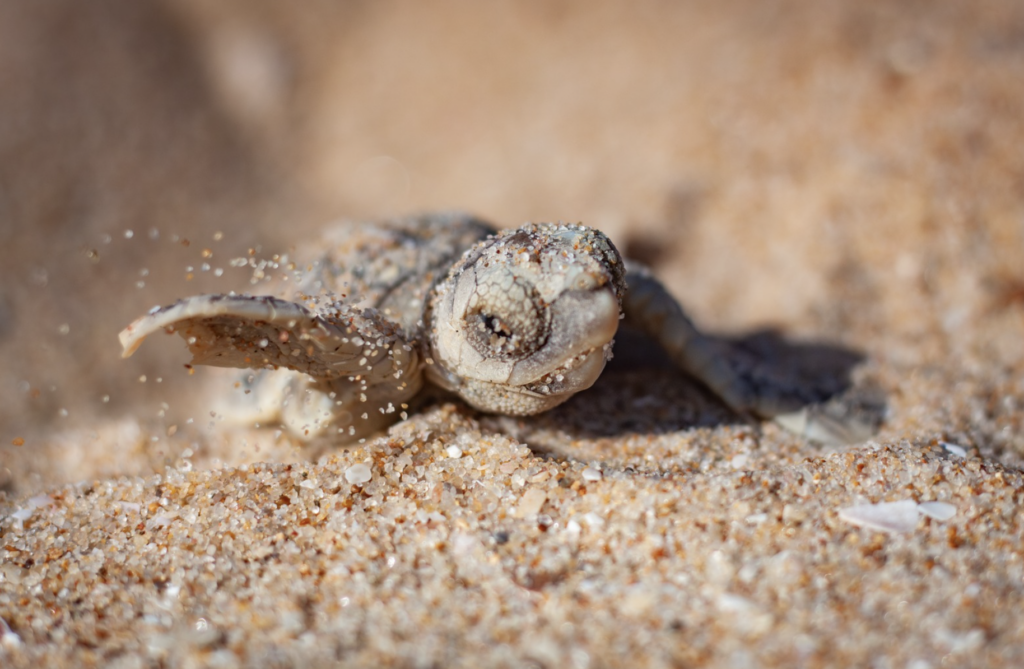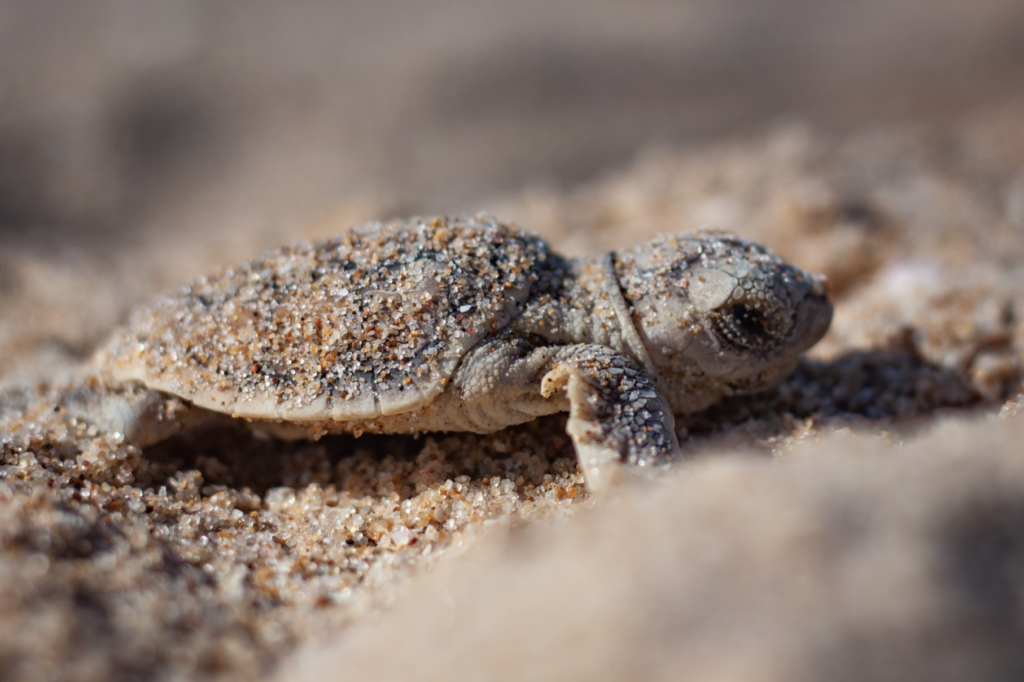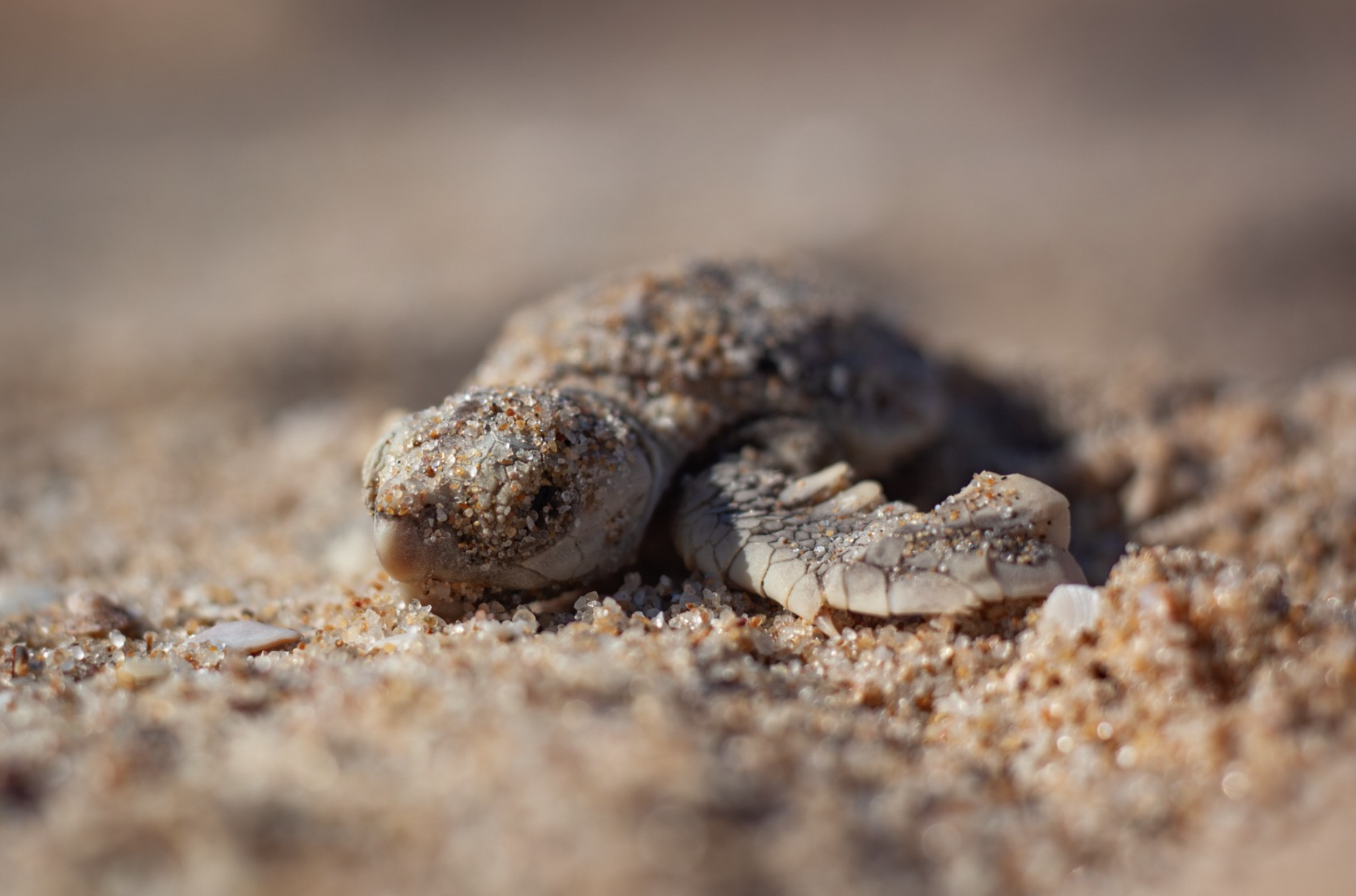
Throughout nesting season Love The Oceans’ Turtle Patrol Team carry out nightly surveys to locate and protect turtle nests on our beaches, increasing the likelihood of eggs successfully hatching and reducing poaching. To provide nesting turtles and hatchlings with the best possible conditions, Love The Oceans’ marine biologists deliver stakeholder workshops on Code of Conduct, environmental awareness and proper procedures when a nest is located. Once a nest is located the Turtle Patrol Team then post 24hr guards who stay with the nest from laying to hatching to give the turtles the best chance possible.
Turtles x Humans
Our turtle program is also an essential part of employment in the area. Each nesting season we provide employment for 15 – 30+ people as turtle guards, who support on average 10 family members each with their income and since unemployment rates are 70% in our area and poverty levels are high, this is an important revenue stream. Most of our guards used to be fishermen so this initiative has been particularly successful in transitioning people away from unsustainable fishing into conservation employment. If you’d like to sponsor our turtle work you can through our website by clicking on the ‘Adopt’ tab in the menu.